

Don’t Do for Your Children What They Can Do Themselves
And Let Them Do It Their Way

I mean, the title sums it up. No need for further explanation. Most parents would get it, or even mentally make a list of all the things they do for their kids that their kids could easily do on their own.
And I get it. It’s hard to step back, to accept their way of doing things around the house. Their version of “clean” is not your version of clean. Their idea of “putting away” might involve shoving everything under the bed. It takes more effort to get them to do the thing than to just do it yourself… blah blah.
Nevertheless, the expectation we have for them to clean their room our way is the real culprit. You weren’t born an expert cleaner. You went through a learning process, one where you didn’t notice the footprints on your wall by the bed, or the crumbs that somehow made it to your pillow… You get the idea.
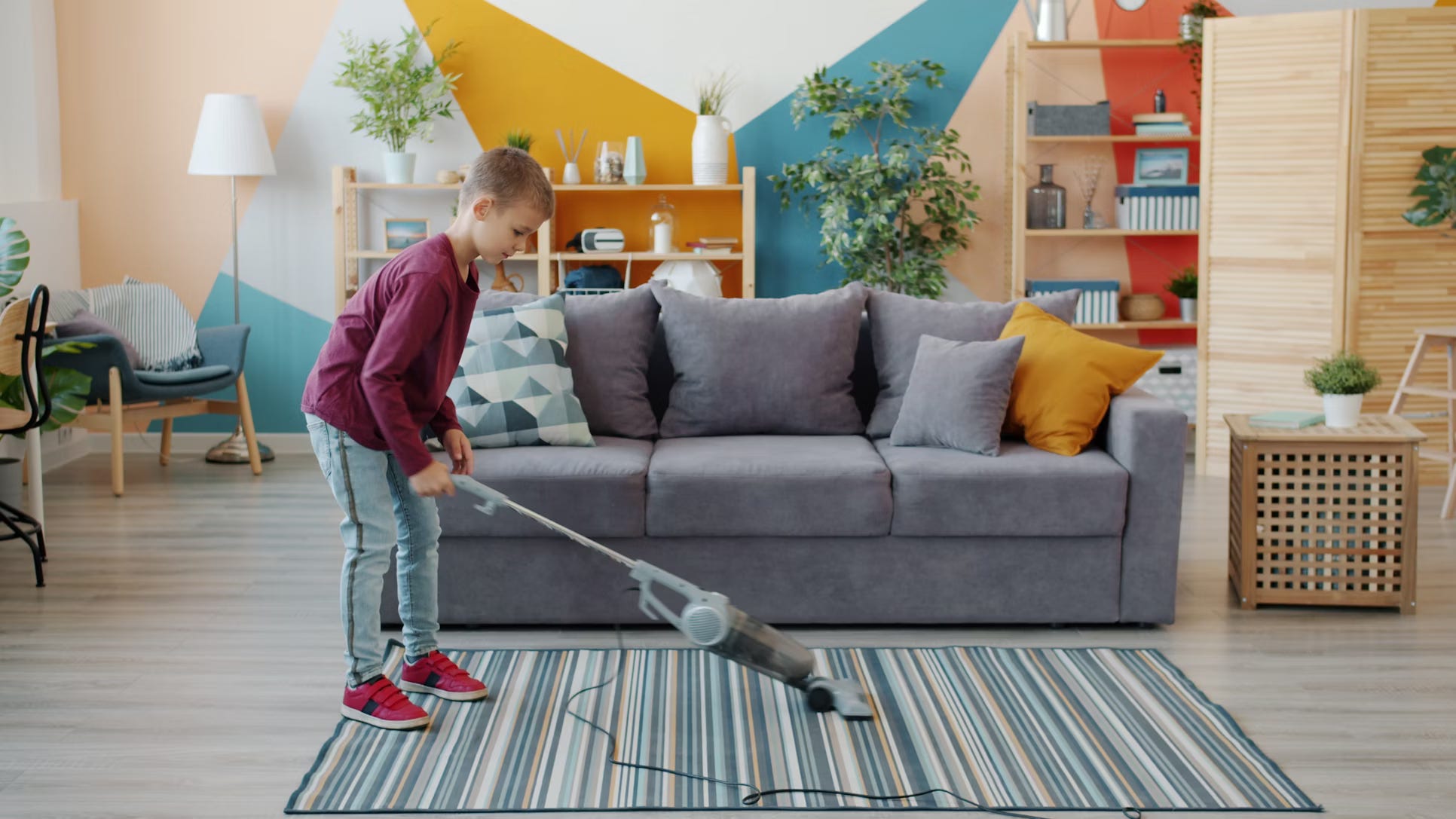
Allow your kids that natural process. Let them fold their clothes their way. It will get refined with time. And you’re not just helping them, you’re helping yourself. Strong habits form first, mastery comes later, and one day you’ll have real help around the house. Not to mention how important it is for them to master basic life skills like cleaning, cooking, and doing laundry.
“Okay, I get it. Where do I start?”
I always tell my friends and anyone who will listen, make your house work for you, but more for your children. For example, I put glasses and plates in the lower cabinets in my kitchen, the ones closest to the dishwasher. I haven’t unloaded the dishwasher for the past six years, my son took on this task when he was four.
Did he break a few plates? Yes. So did I. Breaking dishes is part of learning. He became more aware and careful with glassware, and he also learned to clean up if something breaks. I would often buy second-hand dishes because I knew they might break during the learning process.
Today, my almost-three-year-old is capable of unloading the dishwasher entirely, without breaking a dish (so far, fingers crossed!). All I have to do is remove any knives and high-value items beforehand that I wouldn’t want broken. The rest is hers to handle.
During mealtime, they set the table, clear their plates, and put them in the dishwasher. (And if the dishwasher happens to be full of clean dishes? Well, they unload it first, then add their dirty ones.)
I haven’t cooked breakfast for my 10-year-old since he was 8. That’s his responsibility now. He has a list of simple meals he can make, from scrambled eggs, oatmeal, to peanut butter toast, and he chooses what he’s in the mood for. The same goes for snacks. I don’t hand them out; he knows where to find his list: apples, tangerines, dates, bananas, grapes…
Every morning, the kids have their routine: wake up, take care of their hygiene, fold their pajamas (or toss them in the laundry if they’re dirty), get dressed, and tidy up their room. And no, it doesn’t have to look perfect, if a corner of the blanket is sticking out, that’s fine. Once all that’s done, then we can talk breakfast.
Here’s something fascinating I noticed: my eldest never liked salads. If I made one like a simple mix of lettuce, cucumbers, tomatoes, avocado, and vinaigrette, he’d barely touch it. But last year, I added “make the salad” to his list of pre-lunch chores. Suddenly, everything changed. When he was the one tearing the lettuce, slicing the cucumbers, and mixing the dressing, he loved it. Now he eats salad happily every time he makes it!
Try it with your own children and let me know how it went.
Final point
So if you’re wondering where to start, look around your home and ask, “What can they do without me?” Then make it possible, not perfect, just possible. Start small. Pick one task per month/week (depending on how hard the task is and your child’s age) and stick with it. Don’t get overly ambitious and write a list of ten chores. Your goal is to set them up for success, so consistency matters more than quantity. Make sure your job is to only remind them of theirs, do not brush it off, I call it quality control. You’re there to only check if the task is done to the best of their ability, not yours.
Choosing one new chore per month and doing it consistently for thirty days will bring better results than adding five chores at a time that require your constant supervision. Learning new things and developing habits takes time. You have to be realistic.
By the end of the year, your child will have gained mastery in 12 chores.
To make life a little easier, I’ve put together an age-appropriate chore guide so you can start small, track progress, and build your child’s independence.

And the hardest part isn’t getting your kids to help, it’s keeping the motivation to let them do things for themselves, and not slipping back into our old habits of doing everything simply because that’s what we’ve always done, and it’s easier and faster anyways (for the short run).
They’ll surprise you, and you might just find yourself with a little more time to breathe. Trust me, this is coming from a tired mother looking for any chance to reduce the workload without compromising the kids.
What about you? Have you tried handing over a task that used to feel “too big” for your kids? Tell me how it went, successes, messes, and all!
I love this! Such great advice and reminder to start small with one thing and notice how it impacts their agency and responsibility.
100% It also helps them feel connected and capable!